







Bone Profile Blood Test
BONE PROFILE BLOOD TEST
Please see below for the contents of this blood test and explanation of each of the biomarkers.
4 BIOMARKERS
-
BONE PROFILE
- Calcium and Corrected Calcium
- Phosphate (clinic only, not available in capillary)
- Albumin
- Alkaline phosphatase (ALP) -
UPGRADE
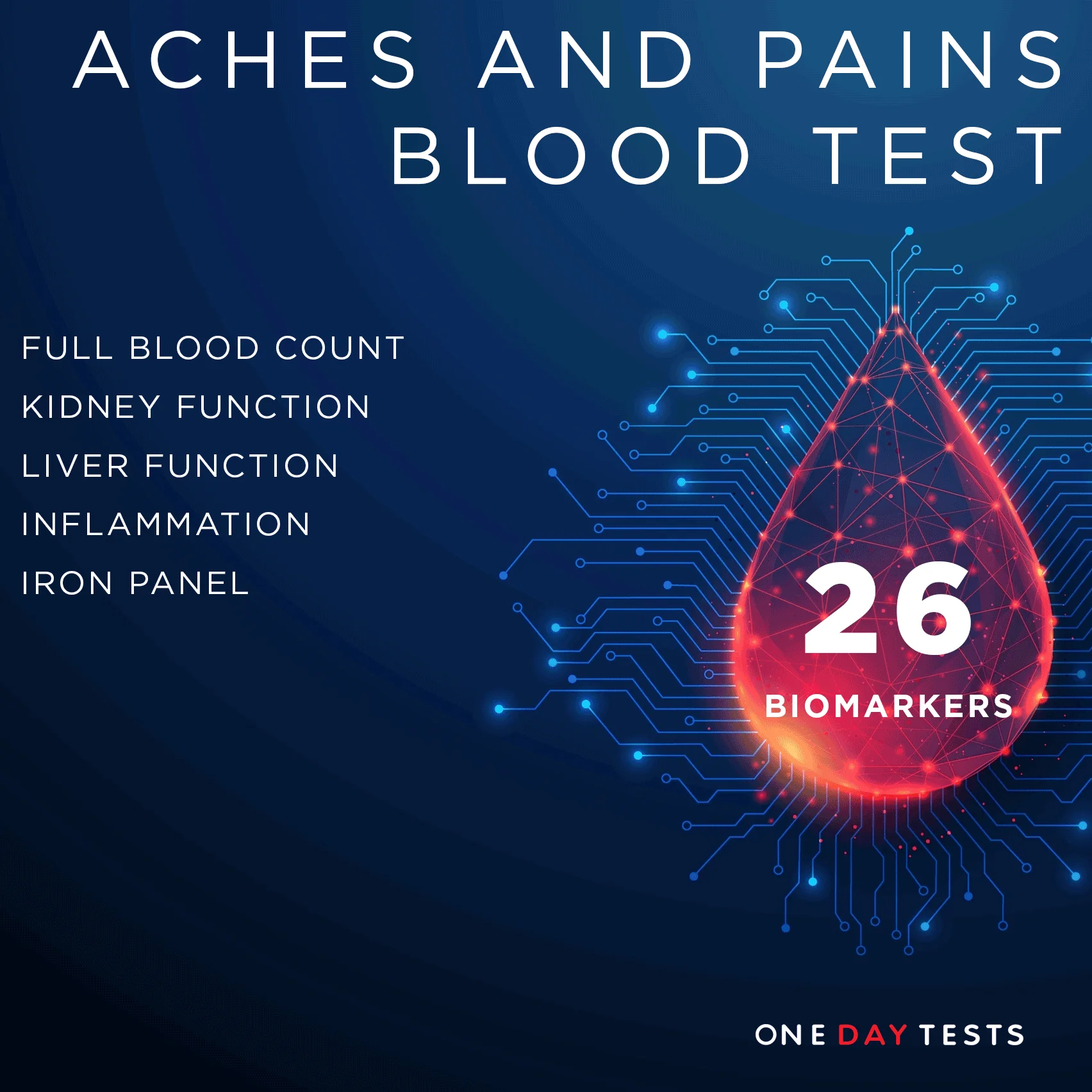
Need more biomarkers? Check out our Aches and Pains Blood Test
COMPONENTS OF THE BONE PROFILE BLOOD TEST
-
Calcium and Corrected Calcium: Calcium is the primary mineral found in bones and is essential for maintaining their strength and density. It also plays a vital role in muscle contraction, nerve transmission, and blood clotting. The bone profile blood test measures the level of calcium in the blood. However, the amount of calcium can be influenced by the levels of albumin, a protein in the blood. Therefore, the test also measures corrected calcium, which adjusts the total calcium value based on the albumin level. This correction provides a more accurate reflection of the biologically active calcium available in the body. Abnormal calcium levels can indicate various conditions such as hyperparathyroidism, certain cancers, vitamin D disorders, and kidney disease.
-
Phosphate: Phosphate, another critical mineral, works in tandem with calcium to build and repair bones and teeth. It is also involved in energy production and muscle function. The bone profile blood test measures phosphate levels to assess bone health and diagnose potential bone disorders. Abnormal phosphate levels can affect bone density and strength, leading to conditions such as osteoporosis or rickets. High phosphate levels can be a sign of kidney disease or excessive dietary intake, while low levels may indicate malnutrition or certain genetic disorders.
-
Albumin: Albumin is the most abundant protein in the blood and is essential for maintaining the oncotic pressure, which keeps fluid in the bloodstream. It is also a carrier protein for various substances, including calcium. In the bone profile blood test, albumin levels are measured to help correct the calcium levels for more accurate results. Low albumin levels can affect the interpretation of calcium levels and may indicate liver disease, kidney disease, or malnutrition.
-
Alkaline Phosphatase (ALP): Alkaline Phosphatase is an enzyme found in several tissues throughout the body, with high concentrations in the liver and bones. ALP plays a crucial role in the mineralisation process, where calcium and phosphate are deposited in the bones to form a hard, strong structure. Elevated levels of ALP in the blood can indicate increased bone turnover, which may occur in conditions such as Paget's disease, bone cancers, or healing fractures. Conversely, low levels of ALP may suggest a deficiency in essential nutrients or rare genetic disorders affecting bone development.
Original: $48.00
-65%$48.00
$16.80Product Information
Product Information
Shipping & Returns
Shipping & Returns
Description
BONE PROFILE BLOOD TEST
Please see below for the contents of this blood test and explanation of each of the biomarkers.
4 BIOMARKERS
-
BONE PROFILE
- Calcium and Corrected Calcium
- Phosphate (clinic only, not available in capillary)
- Albumin
- Alkaline phosphatase (ALP) -
UPGRADE
Need more biomarkers? Check out our Aches and Pains Blood Test
COMPONENTS OF THE BONE PROFILE BLOOD TEST
-
Calcium and Corrected Calcium: Calcium is the primary mineral found in bones and is essential for maintaining their strength and density. It also plays a vital role in muscle contraction, nerve transmission, and blood clotting. The bone profile blood test measures the level of calcium in the blood. However, the amount of calcium can be influenced by the levels of albumin, a protein in the blood. Therefore, the test also measures corrected calcium, which adjusts the total calcium value based on the albumin level. This correction provides a more accurate reflection of the biologically active calcium available in the body. Abnormal calcium levels can indicate various conditions such as hyperparathyroidism, certain cancers, vitamin D disorders, and kidney disease.
-
Phosphate: Phosphate, another critical mineral, works in tandem with calcium to build and repair bones and teeth. It is also involved in energy production and muscle function. The bone profile blood test measures phosphate levels to assess bone health and diagnose potential bone disorders. Abnormal phosphate levels can affect bone density and strength, leading to conditions such as osteoporosis or rickets. High phosphate levels can be a sign of kidney disease or excessive dietary intake, while low levels may indicate malnutrition or certain genetic disorders.
-
Albumin: Albumin is the most abundant protein in the blood and is essential for maintaining the oncotic pressure, which keeps fluid in the bloodstream. It is also a carrier protein for various substances, including calcium. In the bone profile blood test, albumin levels are measured to help correct the calcium levels for more accurate results. Low albumin levels can affect the interpretation of calcium levels and may indicate liver disease, kidney disease, or malnutrition.
-
Alkaline Phosphatase (ALP): Alkaline Phosphatase is an enzyme found in several tissues throughout the body, with high concentrations in the liver and bones. ALP plays a crucial role in the mineralisation process, where calcium and phosphate are deposited in the bones to form a hard, strong structure. Elevated levels of ALP in the blood can indicate increased bone turnover, which may occur in conditions such as Paget's disease, bone cancers, or healing fractures. Conversely, low levels of ALP may suggest a deficiency in essential nutrients or rare genetic disorders affecting bone development.